

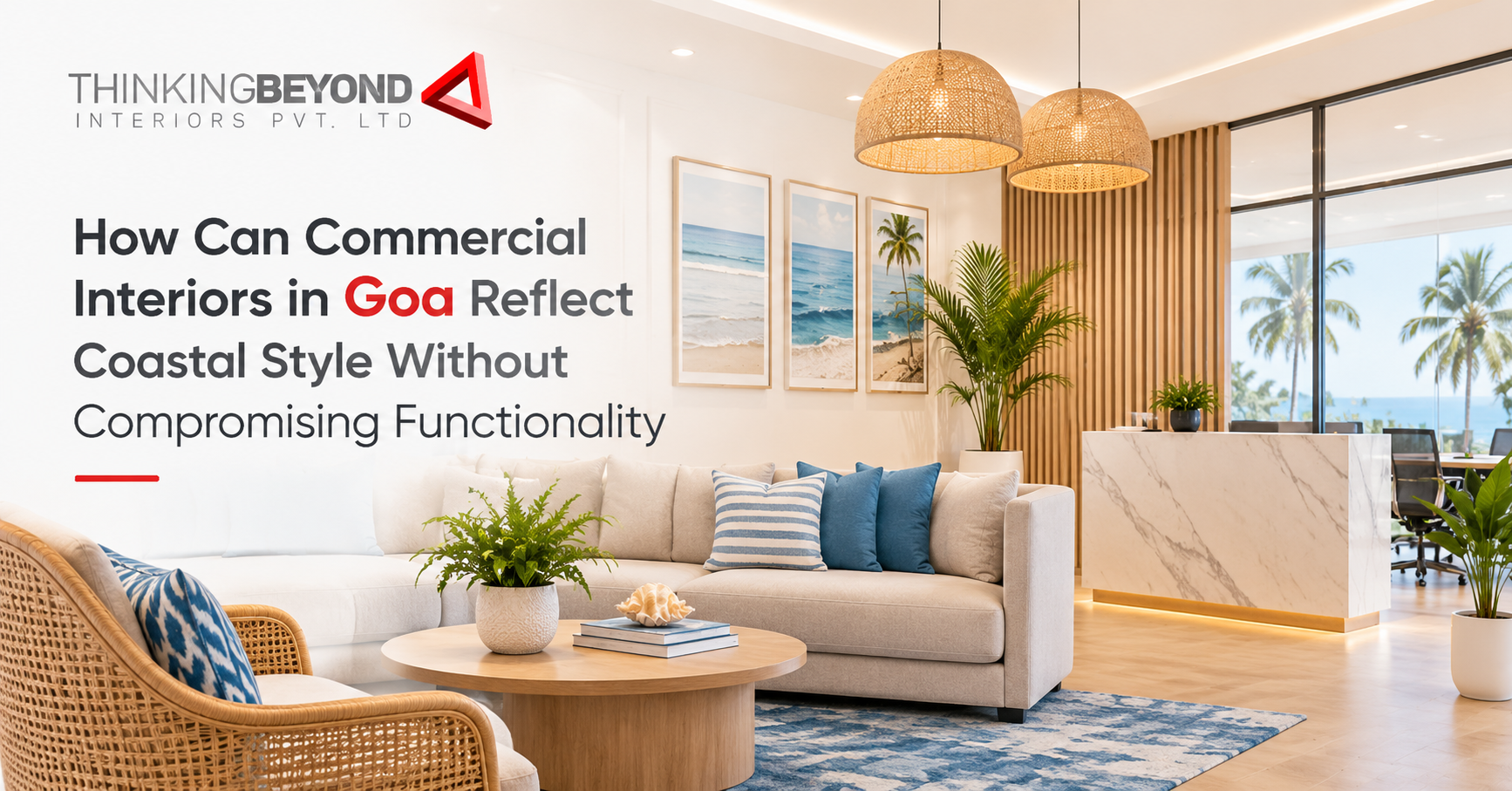
Goa's coastal charm is reflected in its natural landscapes, relaxed atmosphere, vibrant culture, and distinctive architecture. Businesses looking to create inviting commercial spaces can draw inspiration from these elements to design interiors that feel connected to their surroundings. However, commercial spaces must do more than look attractive. They need to support daily operations, accommodate customers, maintain comfort, and withstand regular use. Commercial Interior Designing Services in Goa can help businesses balance coastal aesthetics with practical design choices, creating spaces that are visually appealing, comfortable, and efficient. Thinking Beyond Pvt. Ltd. understands the importance of combining design aesthetics with space planning, material selection, and functionality to create commercial interiors that suit business requirements.
How Coastal Elements Can Influence Commercial Interior Design in Goa
Coastal-inspired interiors are not limited to beach-themed decorations, seashells, or blue walls. The style can be reflected through natural textures, soft colours, open layouts, and materials that create a calm and welcoming environment. For commercial spaces, these elements should be used thoughtfully to maintain a professional appearance. Light shades of white, beige, sand, soft blue, and muted green can help create a relaxed visual atmosphere. Natural textures such as wood, stone, cane, and woven finishes can add warmth without making the space feel overly decorative. These design elements work well in offices, retail stores, cafes, and showrooms where the environment influences how customers and employees feel.
The key is to interpret coastal style in a way that suits the business. A cafe may benefit from a relaxed interior with textured finishes, while a corporate office may use subtle coastal colours and natural materials to create a refined workspace.
Why Functionality Matters in Coastal Commercial Spaces
Commercial interiors experience more activity than residential spaces. Employees move between workstations, customers interact with products or services, and furniture and surfaces are used throughout the day. A design that looks impressive but creates movement restrictions, maintenance difficulties, or discomfort can negatively affect daily operations. In Goa, humidity, coastal air, and seasonal weather conditions are also important considerations when selecting materials and planning interiors. Some finishes, metals, wood products, and fabrics may require additional care depending on their exposure and quality. Choosing suitable materials can help reduce maintenance concerns and protect the interior's appearance over time.
Businesses should consider ventilation, lighting, furniture durability, storage, and circulation before finalising the design. These practical decisions help ensure that coastal inspiration does not come at the cost of usability.
How Commercial Interior Designing Services in Goa Can Balance Style and Practicality
A successful commercial interior combines visual appeal with decisions that support the way people use the space. Coastal-inspired design can be incorporated through several elements without making the interior difficult to manage.
1. Choose Materials That Suit the Coastal Environment
Material selection is one of the most important aspects of commercial interior design in Goa. While natural finishes create an attractive coastal look, not every material is suitable for every area. High-moisture zones, entrances, frequently used surfaces, and customer-facing spaces may require different material choices. Businesses can consider easy-to-maintain flooring, moisture-resistant finishes where appropriate, durable upholstery, and corrosion-resistant hardware. Natural wood textures can be introduced through furniture, wall panels, or decorative elements using suitable finishes. When comparing a commercial interior design services list, businesses should pay attention to material selection, durability, finishing options, and maintenance requirements instead of choosing designs based only on appearance.
2. Use Natural Light Without Creating Discomfort
Natural light can make commercial interiors feel more open and pleasant. Large windows, glass partitions, and thoughtfully placed openings can help bring daylight into the space. However, excessive sunlight can cause glare, increase indoor heat, and make certain work areas uncomfortable. Window treatments, blinds, suitable glass solutions, and furniture placement can help control direct sunlight. Workstations should be positioned to minimise screen glare, while customer seating can be arranged to make better use of available daylight. A balanced lighting plan should combine natural light with artificial lighting for different activities and times of day.
3. Create Open Layouts With Clear Movement Paths
Coastal interiors often feel spacious because of their uncluttered appearance. Commercial spaces can adopt the same principle by reducing unnecessary furniture, keeping circulation areas clear, and organising the layout according to business needs. For businesses exploring small commercial interior design services, efficient space planning becomes especially important. A smaller office, boutique, salon, or retail store may need multifunctional furniture, vertical storage, compact workstations, and carefully arranged displays. The goal is to make the space feel open and practical without overcrowding it with furniture or decorative elements.
Which Coastal-Inspired Features Work Best in Commercial Spaces?
Different design elements can introduce a coastal feel while supporting practical requirements. The right choices depend on the business type, available space, budget, and maintenance expectations.
Design Element |
Coastal Inspiration |
Functional Benefit |
|---|---|---|
|
Colour palette |
Sand, white, muted blue, earthy green |
Creates a calm and visually balanced environment |
|
Flooring |
Stone-look tiles, suitable textured finishes |
Supports durability and easier maintenance |
|
Furniture |
Natural wood tones, cane-inspired details |
Adds warmth and character |
|
Lighting |
Pendant lights, layered lighting, daylight |
Improves visibility and creates atmosphere |
|
Wall finishes |
Textured paint, subtle natural patterns |
Adds visual interest without excessive decoration |
|
Storage |
Built-in cabinets and concealed storage |
Keeps the space organised and clutter-free |
These features should work together rather than compete for attention. Using too many textures, decorative pieces, or contrasting colours can make the interior feel crowded. A restrained approach often creates a more polished commercial environment.
How to Design Commercial Spaces for Comfort and Efficiency
Office Interiors
Offices inspired by coastal design can use soft colours, natural textures, and open work areas to create a comfortable atmosphere. However, employee productivity depends on ergonomic furniture, appropriate lighting, acoustic control, and organised workstations. A practical office layout should include clear movement paths, suitable meeting areas, storage, and spaces for focused work. Coastal design can be introduced through wall finishes, furniture accents, plants, and lighting without distracting employees from their tasks. Businesses searching for commercial interior design services near me should prioritise designers who understand workplace functionality, space utilisation, and the practical needs of employees alongside aesthetics.
Retail Stores and Showrooms
Retail interiors should make products easy to explore while maintaining a memorable visual identity. Coastal-inspired finishes can create a welcoming atmosphere, but display arrangements, customer circulation, storage, and lighting must remain priorities. Product displays should be easy to access, walkways should not feel restricted, and checkout areas should be positioned conveniently. Natural colours and textures can complement merchandise instead of overpowering it.
Cafes and Hospitality Spaces
Cafes, restaurants, and hospitality businesses can benefit from coastal aesthetics because they naturally support relaxed and inviting environments. However, seating arrangements, cleaning requirements, kitchen access, service movement, and table spacing should guide the layout.
Furniture and finishes should be selected with regular cleaning and frequent use in mind. Decorative lighting, natural textures, and carefully chosen colours can create an appealing atmosphere without interfering with staff movement or guest comfort.
Common Mistakes to Avoid in Coastal Commercial Interior Design
Businesses sometimes focus too heavily on appearance while overlooking practical requirements. Using delicate materials in high-traffic areas, adding too many decorative elements, or selecting furniture without considering space can create problems after the interior is completed. Another common mistake is ignoring ventilation and humidity while planning finishes and furniture. Materials that are unsuitable for the environment may require frequent maintenance or lose their appearance sooner than expected. Poor lighting placement can also create glare, while insufficient storage can make an otherwise attractive space look disorganised.
A better approach is to establish functional requirements first and then introduce coastal design elements that support them. This makes it easier to create an interior that remains attractive and useful in the long term.
What to Consider Before Hiring Commercial Interior Designers in Goa
Before beginning a commercial interior project, businesses should evaluate their requirements, budget, timeline, and the type of experience they want to create for employees or customers. The designer should understand the purpose of the space, the expected daily activity, and the practical challenges associated with the location. Look for a design approach that considers space planning, material selection, lighting, furniture, storage, and maintenance rather than focusing only on visual concepts. Reviewing previous projects, discussing design priorities, and understanding the execution process can help businesses make more informed decisions. Comparing the best commercial interior designing services in Goa should involve assessing how well each designer understands the business, adapts the layout to its needs, and balances appearance with functionality.
The right Commercial Interior Designing Services in Goa should be able to translate the business's requirements into a practical design while maintaining a consistent visual style. Clear communication during the planning stage can also help avoid unnecessary changes and ensure that the finished space reflects the original objectives.
Conclusion
Coastal-inspired commercial interiors can bring a sense of calm, warmth, and local character to offices, retail stores, cafes, and hospitality spaces in Goa. The best results come from combining natural colours, textures, thoughtful lighting, and open layouts with durable materials, efficient movement, and easy maintenance. Businesses do not need to sacrifice functionality to achieve a coastal aesthetic; they simply need to make design choices that support both appearance and everyday use. Thinking Beyond Pvt. Ltd. can be considered by businesses looking to create commercial interiors that balance their design vision with practical space requirements. A well-planned interior can make the space more comfortable for employees, welcoming for customers, and better suited to the demands of daily business.
Frequently Asked Questions
1. What do commercial interior designers charge?
Commercial interior design charges depend on the size of the space, design complexity, materials, furniture requirements, and the scope of work. Costs may vary based on whether the project involves basic space planning, complete interior design, or turnkey execution.
2. What is a commercial interior designer?
A commercial interior designer plans and designs business spaces such as offices, retail stores, cafes, showrooms, and restaurants. They focus on layout, lighting, furniture, materials, aesthetics, and functionality to create spaces that support business operations and customer experience.
3. How long does a commercial interior project take?
The timeline depends on the project's size, design complexity, material availability, and execution requirements. Small commercial projects may take a few weeks, while larger spaces with extensive renovation, custom furniture, and multiple installations may take several months.
4. What is the 3-5-7 rule in interior design?
The 3-5-7 rule in interior design means arranging decorative items in groups of three, five, or seven to create visually balanced and attractive spaces.
5. Which company is best for interior design?
Thinking Beyond is a good choice for businesses and property owners looking for thoughtfully planned interior design solutions. The company focuses on combining aesthetics, functionality, space utilisation, and practical design elements to create interiors that suit different requirements, preferences, and budgets.