

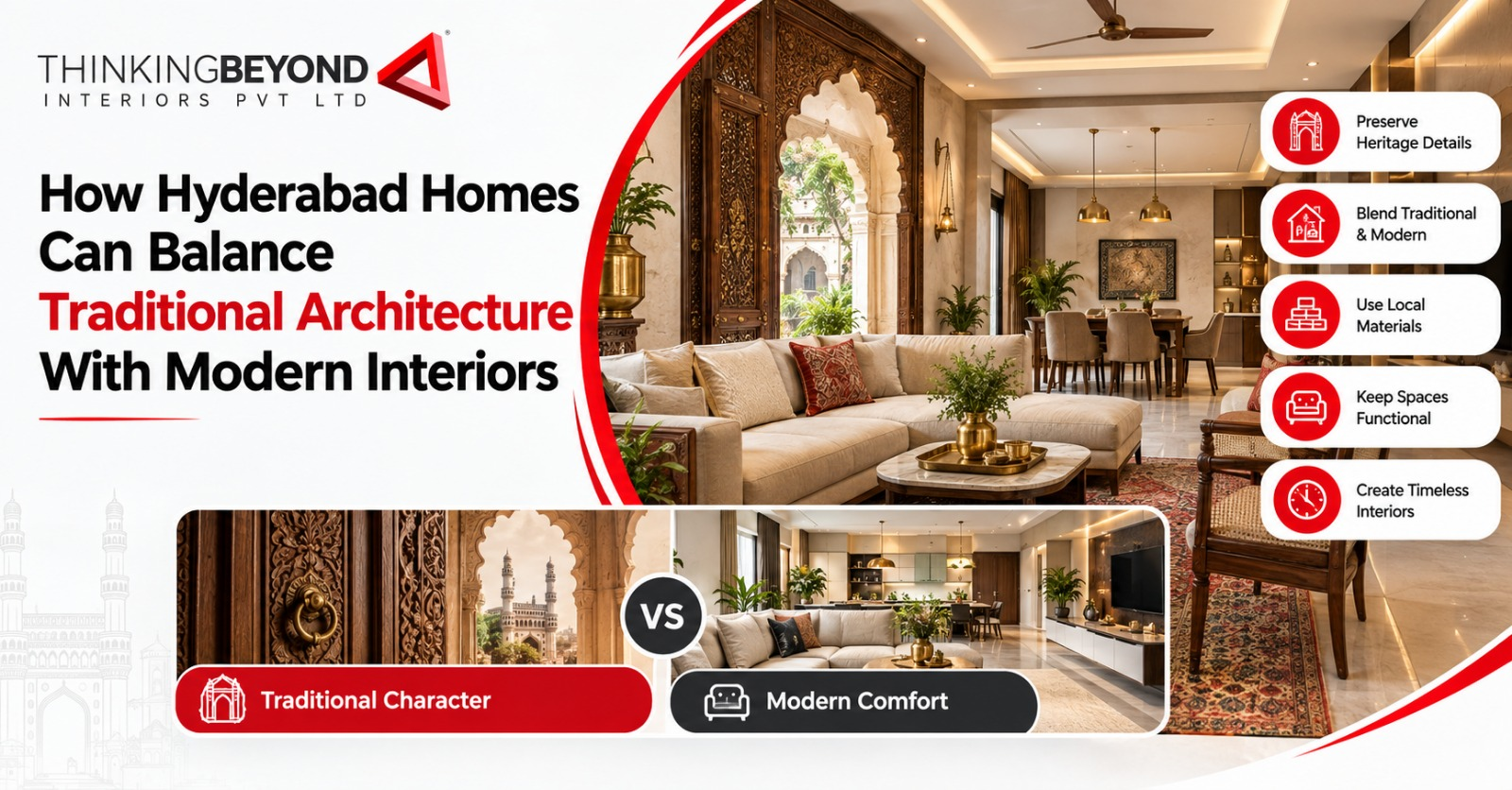
It is possible to combine traditional architecture and contemporary interiors in Hyderabad, keeping cultural significance while including modern layouts, materials, technology, and functionality at the same time. Such details as arches, hand-crafted touches, natural stone, wood items, and traditional patterns can co-exist with modern kitchens, furniture, storage solutions, lighting, and colors. It is not necessary to split the house into "traditional" and "modern" areas, but to make both styles flow seamlessly. With proper home interior design services in Hyderabad, one can maintain the soul of his/her property and adapt every room for the needs of modern life.
Key Takeaways
- Traditional architectural details can become the focus of a modern interior.
- Contemporary functionality is not about stripping the cultural soul of a Hyderabad property.
- Materials, colors, and lighting are essential in bridging two styles together.
- Space planning allows maintaining the practicality of traditional details.
- Custom-made furniture and storage solutions allow you to make the place modern but unique.
How Can You Find the Perfect Blend Between Traditional Architecture and Contemporary Interiors?
A perfect blend between traditional architecture and modern interiors is achieved by maintaining the architectural soul of your house but updating it in order to suit your current needs.
As for a house in Hyderabad, you should maintain one of the architectural arches, wooden elements, stone floors, or even an architectural element on the ceiling, along with modern furniture, invisible storage units, and modern lighting fixtures.
The main idea is to preserve the things that matter from architectural, cultural, and emotional perspectives rather than create a house similar to its previous self. For example, your traditional entrance will stand out while the adjacent living room will have modern furniture and a palette of colors.
Why Does This Design Approach Matter for Hyderabad Homes?
Hyderabad has a distinctive architectural identity shaped by its history, regional materials, craftsmanship, and evolving urban lifestyle. As homes become more contemporary, homeowners increasingly want interiors that reflect both their cultural background and their current way of living.
A completely modern interior can sometimes make a character-rich property feel disconnected from its architecture. At the same time, using traditional elements everywhere can make spaces feel visually heavy or less adaptable to contemporary requirements.
This is where home interior design services in Hyderabad can add value. Professional planning allows architectural character, personal preferences, and everyday functionality to be considered together instead of treating them as separate priorities.
How Can Traditional Elements Be Integrated Into Modern Home Interiors?
Use Traditional Features as Visual Anchors
Traditional elements work particularly well when they are given enough space to stand out.
An archway, carved wooden panel, handcrafted artwork, or natural stone surface can become a focal point rather than being repeated throughout the room. Surrounding it with simpler furniture allows the architectural feature to remain visually important.
This creates contrast without creating conflict.
Combine Heritage Materials With Contemporary Forms
Materials often provide the strongest connection between traditional and modern design.
Natural wood, stone, terracotta, brass, and handcrafted surfaces can be paired with glass, metal, engineered finishes, and clean-lined furniture.
For instance, a traditional wooden console can sit against a contemporary wall treatment, while brass accents can complement modern lighting fixtures. The materials provide familiarity while their application keeps the overall space contemporary.
Create a Controlled Colour Palette
Colour can easily determine whether a traditional-modern interior feels sophisticated or overwhelming.
Instead of using several strong colours simultaneously, homeowners can choose a neutral foundation and introduce traditional shades through upholstery, artwork, rugs or accessories.
Earthy tones, muted greens, warm neutrals and understated metallic accents can create a connection with Indian design without making every surface decorative.
Key Factors to Consider When Combining Both Styles
Architectural Character
Before changing an existing space, identify the elements that give the property its identity. Some features may be worth preserving because they contribute to the home's character and visual history.
Lifestyle Requirements
A family that works from home, entertains frequently, or has children will require a different layout from a couple seeking a minimalist residence.
Traditional detailing should therefore support the way the household actually uses the space.
Proportion and Scale
Traditional furniture and architectural elements can sometimes be visually substantial. Modern furniture tends to have cleaner and lighter profiles.
Maintaining appropriate proportions ensures that one style does not overpower the other.
Lighting
Lighting can transform how traditional materials appear in a contemporary setting.
Layered lighting using ambient, task, and accent sources can highlight architectural details while keeping the overall home comfortable and functional.
Storage
Modern homes need practical storage, even when their visual language is traditional.
Built-in wardrobes, concealed cabinets, modular storage, and multifunctional furniture can keep everyday belongings organised without competing with architectural features.
Benefits of Combining Traditional Architecture With Modern Interiors
Preserves Cultural Character
Traditional details can give a home a stronger sense of identity. Rather than following a completely generic contemporary aesthetic, homeowners can create spaces that reflect regional and personal influences.
Improves Everyday Functionality
Modern planning introduces practical features such as better storage, efficient kitchen layouts, comfortable furniture, and improved lighting while allowing the original character of the property to remain visible.
Creates a More Timeless Interior
Trends change quickly. A carefully balanced combination of traditional materials and contemporary forms can create an interior that remains relevant for longer.
Allows Personal Expression
Homeowners do not have to choose between cultural heritage and contemporary preferences. Family heirlooms, traditional artwork, or handcrafted pieces can be incorporated alongside modern furnishings.
Common Mistakes and Challenges to Avoid
Mixing Too Many Decorative Styles
Using several traditional patterns, colours, materials, and furniture styles in the same room can create visual clutter. Select a few meaningful elements instead.
Treating Traditional Features as Decoration Only
Architectural features should work with the layout rather than simply being added as decorative pieces. Their scale, placement, and functionality need to be considered.
Making Everything Match
A home does not need identical finishes throughout. Some variation creates depth, provided there is a consistent connection through colour, material, or proportion.
Ignoring Modern Storage Needs
A beautiful traditional interior can quickly become impractical when there is insufficient storage. Contemporary functionality should be planned from the beginning.
Overusing Traditional Motifs
Repeating the same patterns, carvings, or ornamental details throughout every room can make the home feel themed rather than thoughtfully designed.
How to Create a Successful Traditional-Modern Home in Hyderabad
Start by identifying the architectural and cultural elements that genuinely matter to you. These could include a particular material, artwork, architectural detail, family furniture, or regional craft.
Next, establish the functional requirements of each room. Consider how people move through the space, where storage is required, and which activities need dedicated areas.
Then create a design language that connects both styles. A simple contemporary base can provide the flexibility needed to showcase selected traditional elements.
For example, a modern living room can include streamlined seating, concealed storage, and contemporary lighting while incorporating a carved wooden feature or handcrafted rug as a focal point.
The same principle can continue into bedrooms, dining areas, and transitional spaces, creating consistency without making every room identical.
Working with home interior design services in Hyderabad can also help homeowners evaluate materials, layouts, lighting, and furniture choices before implementation. This is particularly useful when an existing home's architecture needs to be respected while its functionality is being upgraded.
Expert Perspective and Practical Insight
The most successful traditional-modern interiors usually begin with restraint. Instead of asking how many traditional elements can be added, designers should ask which elements deserve attention.
A useful approach is to establish a contemporary functional foundation and introduce traditional character selectively.
Designers should also consider how materials age. Natural wood, stone, and handcrafted surfaces may develop character over time, while certain highly trend-driven finishes can quickly look dated.
Another important consideration is consistency. The transition from one room to another should feel intentional. A traditional living room followed by an entirely unrelated ultra-modern bedroom can make the home feel fragmented.
The goal is a home where the architecture, interiors and lifestyle appear to belong to the same story.
Frequently Asked Questions
Can traditional architecture work with modern furniture?
Yes. Traditional architectural details can work effectively with modern furniture when proportions, colours and materials are carefully coordinated. Clean-lined furniture can actually make heritage features more prominent.
How can I make a traditional Hyderabad home look modern?
Focus on simplifying the layout, improving lighting, introducing contemporary furniture and adding practical storage while preserving selected architectural or decorative elements that give the home its character.
Which materials work well for traditional-modern interiors?
Wood, natural stone, brass, terracotta, glass, metal, and contemporary engineered finishes can work together when used with a controlled colour palette and consistent design language.
Should every room follow the same traditional-modern style?
Not necessarily. Each room can have its own character, but repeating certain colours, materials, furniture profiles, or design details can create a cohesive overall home.
Is professional interior planning necessary for combining both styles?
Professional planning can be valuable when homeowners want to preserve architectural character while improving functionality. Designers can help coordinate layouts, materials, lighting, storage, and furniture so the two styles feel integrated.
How do I avoid making a modern home look too traditional?
Use traditional elements selectively rather than repeating them everywhere. Contemporary furniture, simpler surfaces, restrained colours and modern lighting can provide balance.
Final Thoughts
A Hyderabad home does not have to choose between heritage and contemporary living. The most considered interiors allow traditional architecture, regional materials and personal memories to coexist with modern layouts, technology, storage and comfort. The key is thoughtful integration rather than excessive decoration. Thinking Beyond Interiors Pvt. Limited approaches residential interiors with an emphasis on balancing visual character and everyday functionality, helping homeowners create spaces that feel personal, relevant, and enduring. With the right planning, a traditional architectural identity can become one of the strongest foundations for a distinctly modern home.