

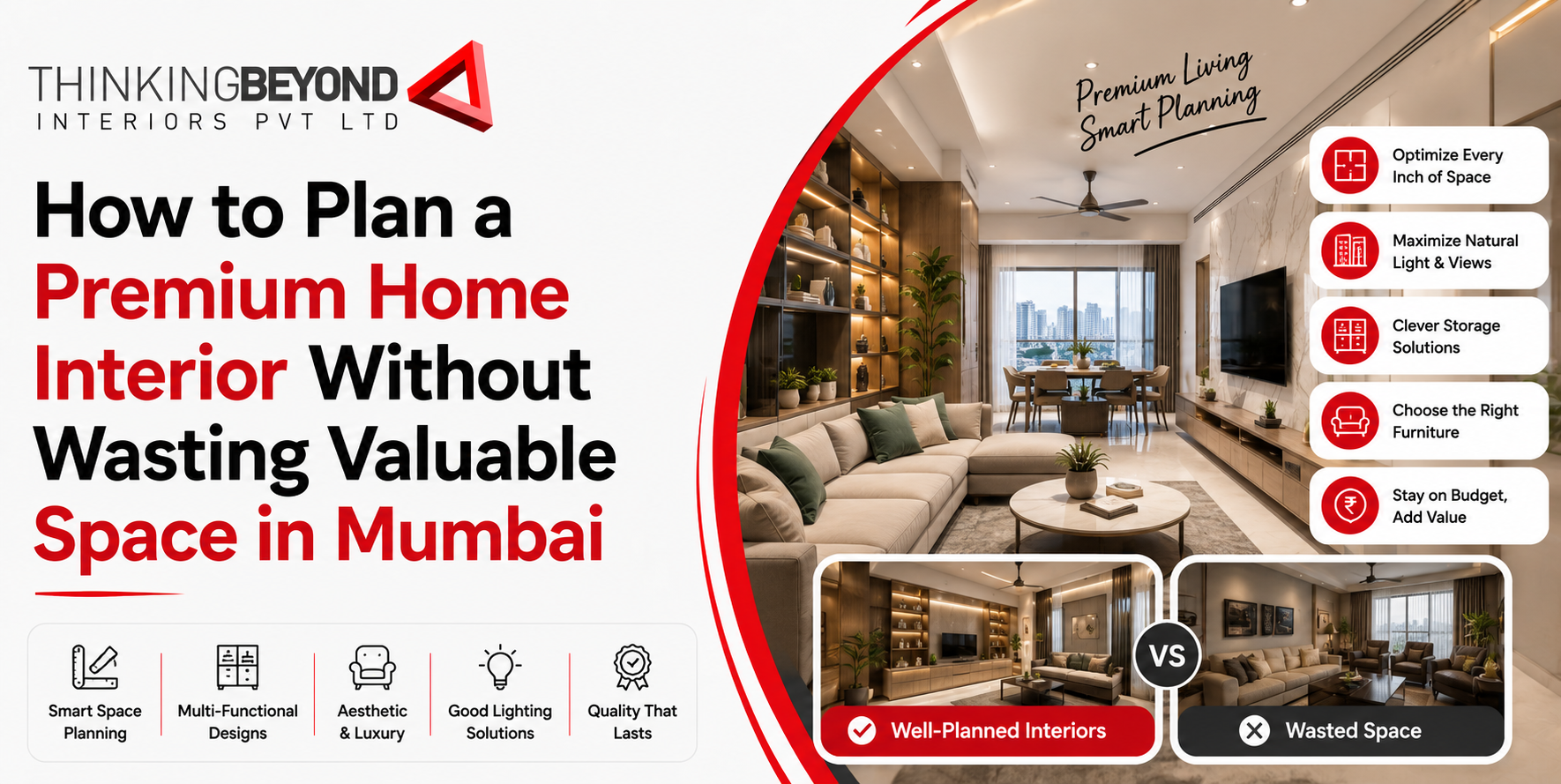
Planning a premium home interior in Mumbai is not about piling on furniture, finishes, or decorations. It’s about making every inch of the space work while keeping things open and comfortable. The best interior designers for homes in Mumbai start with space planning. They take time to understand how families live in each room. Then they add custom storage solutions, furniture that serves a purpose, lighting that fits the mood, and design details that are just the right size. This way, homes look luxurious. Still feel easy to move around in. The result is a living space that feels wide open, neatly arranged, truly personal, and functional never cramped or cluttered.
Key Takeaways
- Premium interiors rely on space planning rather than heavy decoration.
- Built‑in storage can make use of vertical and awkward spaces that are often ignored.
- Multifunctional furniture lets small rooms do multiple jobs.
- Lighting, colour, material choice and furniture size all affect how roomy a house feels.
- Customised design is especially useful when every square foot counts.
- Good planning looks at what's needed now and what may be needed later.
What Is Space-Efficient Premium Home Interior Design?
Luxury Does Not Have to Mean More
A premium interior is often associated with elaborate finishes, statement furniture, decorative lighting, and expensive materials. However, luxury becomes more meaningful when these elements are used selectively.
In Mumbai homes, where available space can be a significant consideration, successful design often comes from knowing what to leave out. A carefully positioned statement piece can have greater visual impact than several decorative objects competing for attention.
Designing Around the Way People Actually Live
Every household uses its home differently. A family that regularly works from home has different requirements from one that entertains frequently. Someone who cooks extensively may need more functional kitchen storage, while another homeowner may prioritise a reading corner or entertainment area.
This is why professional residential interior design starts with lifestyle analysis rather than simply selecting a style. The layout should support everyday routines without forcing residents to constantly rearrange furniture or compromise movement.
Why Does Space Planning Matter in Mumbai Homes?
Every Square Foot Has a Purpose
Space planning determines how furniture, storage, circulation areas, lighting, and functional zones relate to one another. When it is done properly, a room can accommodate everything necessary without feeling visually congested.
This is especially important in apartments where the living room, dining area, kitchen, and passageways may need to work together within a relatively compact footprint.
Visual Space Matters Too
A room does not necessarily need to be physically larger to feel more spacious. Clear sightlines, appropriate furniture proportions, consistent materials, and thoughtful lighting can create a stronger perception of openness.
For example, bulky furniture placed directly along circulation paths can make a room feel restricted. A more carefully planned arrangement can preserve movement while giving important design elements enough breathing room.
How Can Premium Interiors Maximise Limited Space?
Use Built-In Storage Where It Makes Sense
Custom storage can transform areas that would otherwise remain underused. Full-height wardrobes, concealed cabinets, window-side storage, and integrated TV units can provide substantial capacity without introducing multiple standalone pieces.
However, storage should not automatically occupy every available wall. The objective is to hide clutter while maintaining visual balance.
Choose Furniture That Performs More Than One Function
Multifunctional furniture is particularly useful when space needs to accommodate different activities.
A storage bed can combine sleeping and storage requirements. An extendable dining table can remain compact during everyday use and expand when guests arrive. A window seat can become both a relaxation zone and additional storage.
The most effective solutions are those that feel like natural parts of the interior rather than obvious space-saving compromises.
Make Vertical Space Work Harder
Walls provide valuable opportunities for storage and display. Tall wardrobes, shelving, cabinetry, and vertical display features can increase functionality without consuming additional floor area.
This approach also keeps frequently used areas clearer, which contributes to a more refined and organised appearance.
Key Factors to Consider
Furniture Proportion
Large furniture can overwhelm a compact room even when the pieces themselves are attractive. Measure the room carefully and consider door openings, walking paths, windows, and access to storage before finalising furniture sizes.
Storage Requirements
Storage should be planned according to actual belongings rather than estimated capacity. Consider clothing, appliances, books, luggage, cleaning equipment, electronics, and seasonal items before designing cabinetry.
Circulation
A beautiful room becomes difficult to live in if people cannot move comfortably through it. Maintain practical pathways between major furniture pieces and frequently used areas.
Lighting
Layered lighting can make a space feel more open and sophisticated. Ambient lighting establishes overall illumination, while task and accent lighting add functionality and visual depth.
Material and Colour Selection
Consistent colour palettes and carefully coordinated materials can reduce visual fragmentation. Reflective surfaces may also help distribute light, but they should be used selectively rather than covering every surface.
Benefits / Advantages
A Premium Look Without Visual Clutter
When storage, furniture, lighting, and finishes are planned together, the home can maintain a sophisticated appearance without relying on excessive decoration.
The result is often a cleaner visual hierarchy where important architectural or design features receive attention.
Better Everyday Functionality
Space-efficient design can make routine activities easier. Storage becomes more accessible, furniture serves defined purposes, and circulation paths remain clearer.
This is where the value of working with the best interior designers for home in Mumbai becomes apparent. Their role is not simply to make a room attractive but to coordinate aesthetics with practical requirements.
Greater Long-Term Adaptability
A well-planned interior can accommodate changing needs. Flexible furniture, modular storage, and adaptable rooms can make it easier to respond when a family grows, work patterns change, or new requirements emerge.
Common Mistakes / Challenges
Buying Furniture Before Planning the Layout
One of the most common mistakes is purchasing attractive furniture first and trying to fit it into the room later. This can create awkward gaps, blocked pathways, and insufficient storage.
Using Too Many Design Elements
Multiple patterns, finishes, colours, decorative pieces, and furniture styles can make a small space appear busier than it actually is.
Ignoring Hidden Storage
Leaving storage until the final stage often means relying on freestanding cabinets or temporary solutions that consume valuable floor area.
Designing Only for Photographs
A visually impressive room is not necessarily a comfortable one. Furniture should support real activities, and materials should be selected with maintenance and everyday use in mind.
How to Plan a Premium Home Interior Without Losing Space
Start With a Room-by-Room Requirement Study
Before choosing finishes, document what each room needs to accommodate. Identify essential furniture, storage requirements, appliances, work areas, and circulation needs.
Prioritise Customisation Where It Adds Value
Not everything needs to be custom-made. Customisation is most useful where standard furniture leaves awkward gaps or fails to address specific storage and functional requirements.
Create Zones Instead of Adding Walls
Open-plan homes can often be divided visually through furniture placement, lighting, flooring transitions, rugs, or ceiling treatments instead of unnecessary partitions.
This preserves openness while giving different areas a clear purpose.
Review the Design From a Daily-Use Perspective
Walk through the proposed layout mentally—or physically, where possible. Ask whether doors open comfortably, whether storage is accessible, whether people can move around furniture easily, and whether frequently used objects have a logical place.
Expert Perspective / Practical Insight
Premium Design Is About Precision, Not Excess
Experienced designers generally look at a home as a connected system rather than a collection of individual rooms. A wardrobe affects circulation. A kitchen island affects dining movement. Lighting affects how materials appear. Storage affects how much furniture is required.
This interconnected approach is particularly important in urban homes, where small planning decisions can have a noticeable effect on usable space.
A practical rule is to establish function first, then aesthetics. Once the layout works, materials, colours, furniture, and decorative elements can be layered into the design without compromising usability.
Think About What the Home Will Need Later
A home designed only for current requirements may become restrictive as circumstances change. Flexible furniture, additional electrical provisions, adaptable storage, and multipurpose rooms can provide useful flexibility without requiring another major renovation.
The best interior designers for home in Mumbai should therefore be able to explain not only how a proposed design looks today but also how it is expected to perform over time.
Frequently Asked Questions
How can I make a premium home interior look spacious?
Use proportionate furniture, integrated storage, clear circulation paths, consistent materials, and layered lighting. Avoid filling every wall or floor area with decorative elements.
Is customised furniture better for space-saving interiors?
Custom furniture can be particularly useful when rooms have unusual dimensions, structural columns, awkward corners, or specific storage requirements. It allows the available space to be used more precisely.
How can I add storage without making my home look crowded?
Built-in wardrobes, full-height cabinetry, concealed storage, storage beds, and multifunctional furniture can provide capacity while keeping belongings visually organised.
Should small Mumbai apartments avoid luxury interior design?
No. Luxury is not dependent on the size of the home. A smaller apartment can feel premium through thoughtful planning, quality materials, appropriate lighting, refined detailing, and carefully selected furniture.
What should I discuss with an interior designer before starting?
Discuss your lifestyle, budget, storage requirements, preferred design style, maintenance expectations, timeline, family needs, and any plans that could change how the home is used in the future.
How do professional interior designers improve space utilisation?
They analyse the floor plan, circulation, furniture proportions, storage requirements, lighting, and room functions before developing the final design. This helps reduce wasted areas and prevents costly layout changes later.
Final Thoughts
A premium home does not need to be filled with furniture or decorative features to feel luxurious. The strongest interiors use space deliberately, combining functionality, proportion, storage, lighting, materials, and personal preferences into one cohesive environment. For Mumbai homeowners, this approach is particularly valuable because thoughtful planning can make a home feel significantly more comfortable without physically increasing its size. Working with the best interior designers for home in Mumbai can help translate lifestyle requirements into a refined, space-efficient interior that remains practical, organised, and visually sophisticated for years to come. Thinking Beyond Interiors Pvt. Limited focuses on creating thoughtfully planned interiors where aesthetics and functionality work together, helping homeowners make better use of every part of their living space.