

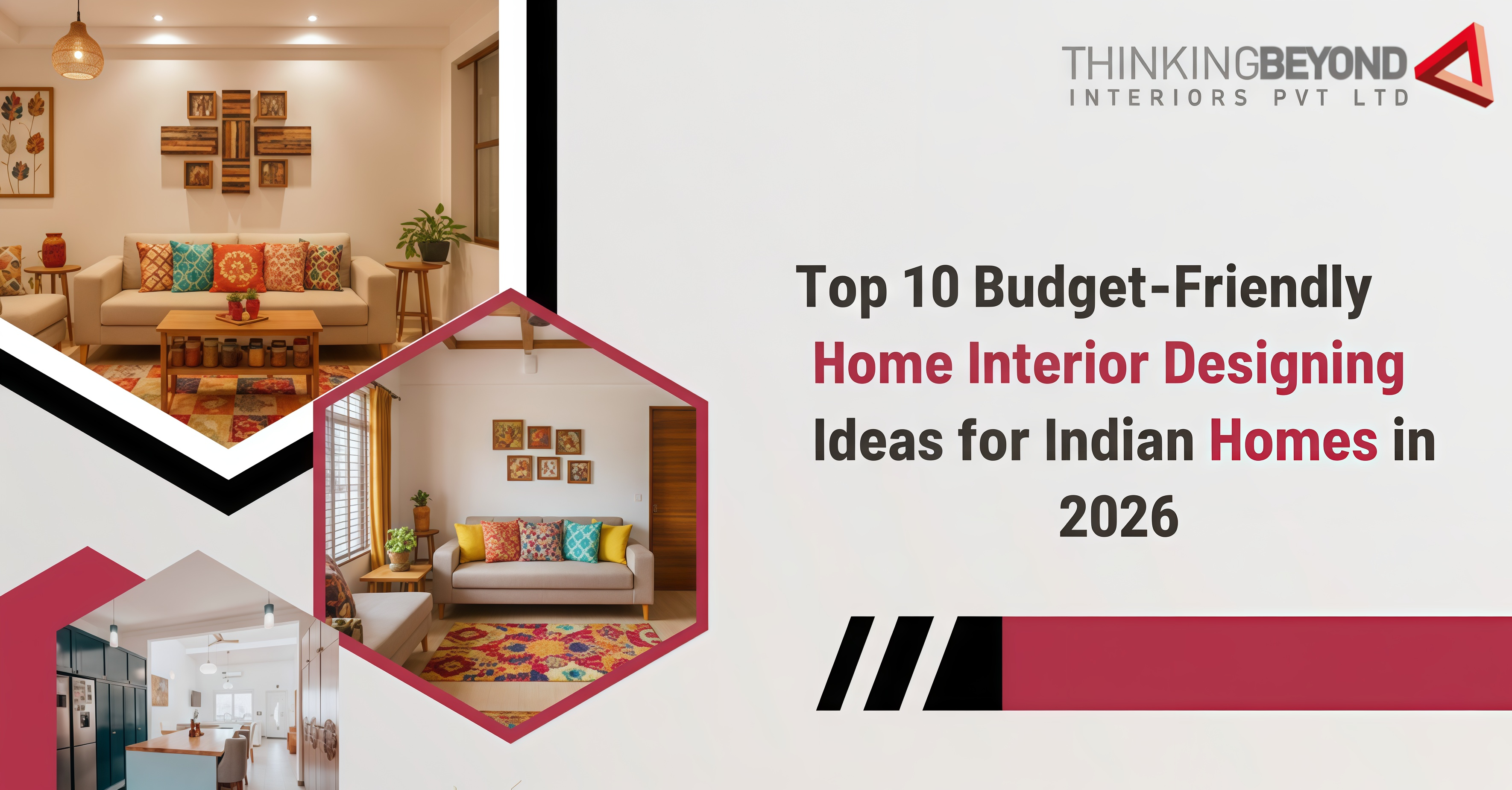
It is not necessarily that an expensive budget must be used to come up with a beautiful home. Actually, with the change of the way of life and the emergence of design thinking that has turned out to be practical, homeowners are turning out to seek intelligent methods of improving their spaces at low costs.
The future of home interior designing on a budget in 2026 is all about careful planning, functionality, and creativity as opposed to costly materials or glitzy decorations. The designs of Indian homes, more so, are in a good place in terms of comfort, climate, culture, and cost.
Learning About the Low-Cost Interior Design of Indian Houses
It is good to know what is meant by "budget-friendly" before embarking on any project involving the interior of a home. It does not imply the sacrifice of quality and residing in unfinished areas. Rather, it is a priority of essentials, prudent alternatives, and investment where it is most needed.
Low space, different family needs, and durability are the main issues that Indian residents have to resolve. The future of interior design in 2026 is practical, durable, and pleasing to the eye, and therefore, every rupee matters.
1. Planning Intelligent Space Planning Over Renovation Proceeds that are Costly
Planning the layout is one of the best methods of saving money, as the layout is correctly planned. Designers do not need to break down walls or alter the plumbing; they aim to maximize the existing layouts.
Restructuring space, redefining spaces, and enhancing traffic may totally change the home experience. A more efficient space planning of the rooms in the small Indian apartments can make the rooms appear bigger and cleaner without a physical modification.
2. Modular Furniture for Flexibility and Cost Control
Modular furniture will remain one of the favorite products among Indian households in the year 2026 due to the flexibility that it provides at an affordable price. Modular unit elements enable homeowners to select standardized elements that can be modified in the future rather than purchasing custom-made furniture in each room.
The modular kitchen, wardrobe, and storage block minimize manufacturing expenses and provide clean finishes as well as durability. They can also be repaired or upgraded easily in the future.
3. Using Affordable Materials with a Premium Look
The cheap interior design does not only encompass basic finishes anymore. Laminates, engineered wood, fluted panels, textured paints, etc., provide a high-end appearance at a fraction of the price of a natural stone or solid wood.
Creative blending of materials is the current practice of interior designers to produce a high-end design without exceeding budget. It is particularly effective in living rooms and bedrooms, where the visual effect is of the greatest importance.
4. Focused Lighting Instead of Heavy Decorative Elements
The most important elements of home interiors are lighting, which in many cases transcends the costliness of the decorative pieces. Layered lighting is an affordable method of improving functionality and mood in 2026.
Ambient lighting, task lighting, and faint accent lighting can transform the whole atmosphere of a room. Homeowners do not need to spend much on decoration, but should invest in well-thought-out lighting plans that will enrich and give personality to rooms.
5. Multipurpose Furniture for Modern Indian Lifestyles
As work-from-home and versatile living are becoming regular practices, versatile furniture is a smart expenditure. Storage beds, foldable dining tables, sofa-cum-beds, and work desks fitted in the wardrobes save space and money.
Such solutions save the necessity to purchase several pieces of furniture and guarantee that the home will be adjusted according to the requirements in the long run.
6. Cost-Effective Wall Treatments and Paint Choices
Walls play a major role in the appearance of the home, and updating them does not necessarily cost any money. The heavy wallpaper and cladding are being substituted by textured paints, stencil designs, and accent walls in 2026.
One statement wall in neutral base colors has produced visual interest without raising the costs. Washable and hardy paints are also selected, which lowers the maintenance costs in the long run.
7. Open Shelving Instead of Closed Storage Everywhere.
Although Indian homes require storage, it is not necessary to place a closed cabinet in all areas. The open shelves in the kitchen, study section, and living rooms save on the cost of materials and hardware.
They also make spaces appear lighter and more open when created cleanly. In open and closed storage, designers tend to seek balance to create functionality without cluttering the space.
8. Reusing and Upgrading Existing Furniture
Reuse is one of the most cost-effective concepts. Furniture refurbishment is becoming popular in 2026 as people seek sustainable and cost-effective options. Worn-out wooden furniture can be repainted, refinished, or reupholstered to suit new interiors.
9. Simple Décor with Personal Touches
Homeowners are not keen on the costly decoration items and are concentrating on the more personal things. Family photos, paintings, plants, and craftwork are used to bring coziness and character into the interior.
These are features that render houses friendly and inhabited at a low cost. Considerable decoration can sometimes do more than expensive accessories.
10. Hiring the Right Interior Designer for Budget Planning
Another myth is that employing an interior designer would make it more expensive. In an actual sense, the correct professional prevents costly errors and proper budgetary allocation.
The experienced designers know how to save and where to invest, hence a balanced result. They also get access to reliable suppliers and products that meet the budget constraints without reducing quality.
Why Budget-Friendly Design Matters More in 2026
Due to the increased living expenses and the dynamism in lifestyles, homeowners are becoming increasingly aware of the choices they make in terms of expenditure on interiors.
The concept of 2026 is that of making smart decisions that can sustain the comfort, functionality, and value in the home interior design, which are cost-effective. The advantage of using designs that have been adapted to suit the needs of Indian homes is that the design is low maintenance, adaptable, and able to meet the needs of daily living, as opposed to being designed with a short-lived trend.
Conclusion
It is not at all impossible to make a stylish and functional home and not spend a lot of money when one approaches it the right way and plans it right. With the emphasis on intelligent designs, functional materials, versatile pieces, and considerate illumination of the space, Indian residents are able to create homes that would appear contemporary and would be pleasant to live in without having to waste lots of money.
Inexpensive interior design is not a question of compromise anymore, but of creativity and making wise decisions. For homeowners looking to bring these ideas to life with expert guidance, Thinking Beyond Pvt. Limited offers professional interior design solutions that balance aesthetics, functionality, and cost, helping create homes that are both beautiful and practical for the future.