

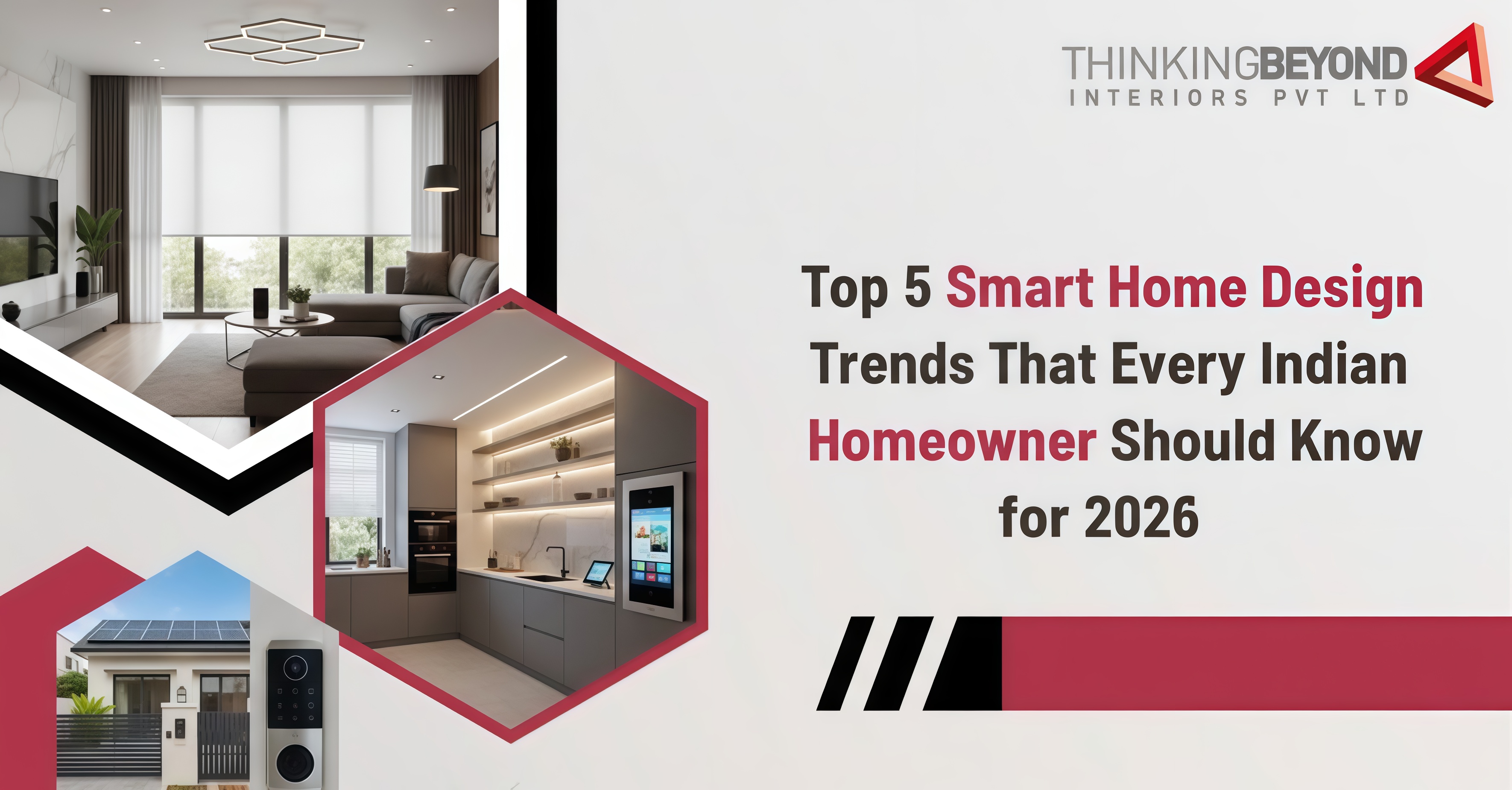
Technology is a part and parcel of our daily lifestyle, and therefore, smart home design is not a luxury anymore; it is a necessity. Indian house owners are moving towards investing in smart interiors that will make their living comfortable, efficient, and future-oriented. Design trends in 2026 are moving towards spaces that are smarter than smart to address human behavior, save on energy usage, and enhance wellness with the ability to overload aesthetics in a home. The integration of technology with the classic design principles makes sure that the homes are contemporary and functional to the utmost extent, yet immensely supportive as well as emotional.
Smart Home Design Trends for Indian Homes in 2026
As people increasingly spend more time at home, working, learning, entertaining, and relaxing, smart home designs have grown beyond the gadgets to encompass considerate space planning, multi-sensory experiences, and easy automation. The trends of design do not only incorporate the innovations around the world but also various Indian needs in the form of security, comfort, adaptability in climatic conditions, and cultural inclination. The knowledge of these trends will enable the homeowner to make wise decisions that will add to the quality of life and also to the value of the property.
1. Voice-Activated and Gesture-Controlled Interiors
Voice assistants are now the name of the house, and in 2026, it is much more than talking to a speaker. Housing has been redesigned in such a way that voice and gesture control are internalized in the fabric of the day-to-day interactions.
The voice and gesture controls enable the residents to control lighting, temperature, curtains, music, and even the appliances without using any switches. This not only makes daily life easier but also enhances accessibility, particularly to children and older members of the family.
- Hands-Free Lighting: Voice-activated or gesture-activated lights that switch on/off or get dimmer improve the number of touchpoints and provide convenience.
- Smart Curtains/Blinds: Voice-activated or motion-activated window treatments allow you to maintain privacy and natural light.
- Music and Climate Control: Music systems, TVs, and air conditioning can be done organically without the use of remote controls.
This trend not only makes it more convenient but also optimizes the use of energy, as smart systems automatically control settings according to the level of presence and activity.
2. Integrated Home Wellness and Environment Control
The contemporary home design is all about wellness due to the way the pandemic changed the way people understand a healthy lifestyle. Smart homes will also be able to anticipate and enhance indoor air quality in 2026, whether that is air quality or lighting that will be more circadian-friendly.
The smart sensors and environment-control systems co-exist to ensure that residential homes remain healthy, comfortable, and customized to the requirements of the residents.
- Air Quality Monitoring: Sensors detect the amount of pollutants, allergens, and humidity, and act automatically either by using an air purifier or by adjusting ventilation.
- Circadian Lighting Systems: The artificial lights imitate the natural sun rays, facilitate sleep-wake rhythm, and general mood.
- Climate Zoning: By having the temperature in various zones regulated on its own, depending on the utilization, the comfort and efficiency of energy are enhanced.
These systems are also a great help to Indian households where pollution and climate change are the order of the day, and they help relieve the body and the mind as well as make day-to-day life easier and healthier.
3. AI-Driven Predictive & Adaptive Automation
The second step in smart homes is prediction—systems capable of learning trends and modifying environments without being asked to. Homes do not react but anticipate.
Smart interiors that are based on AI understand user behavior over time. This implies that the house knows what you prefer even before you know, and living spaces become personal and easy to live in.
Adaptive Temperature Control: The system will identify your daily routine, and before you even step into a room, it will adjust the heating/cooling.
- Predictive Lighting: Lighting plans will change automatically to make you comfortable and save energy according to your schedule.
- Automation-Based on Usage Pattern: Intelligent systems optimize activities such as water heating, appliance use, and standby power in an attempt to reduce bills.
Such capabilities render smart homes emotionally intelligent, which complements the ideas of Indian families who prefer to be comfortable without any complexity.
4. Touchless Technology for Hygiene and Comfort
The concept of touchless technology is a new trend initiated by medical issues, but it has since gained momentum in the design selections. Indian households are adopting hands-free in the kitchens, bathrooms, and general living areas to enhance hygiene and prevent the spread of germs.
The practical convenience of smart touchless also comes with the convenience of performing daily chores easily and intuitively.
Stock: Automatic Faucets and Soap Dispensers: Fewer contact surfaces, enhanced hygiene in kitchens and bathrooms.
- Intelligent Door: The keyless door access with face verification or mobile authentication will increase the safety and convenience.
- Voice-Activated Elevators and Switches: Voice interfaces make all buildings easier to use in multi-story homes or gated communities.
These attributes merge cleanliness, safety, and modernist design, which are becoming more and more critical in Indian families that value wellness and realistic lifestyles.
5. Smart Furniture and Modular Adaptability
In 2026, smart home design does not just apply to the technology systems, but it also goes to the furniture that communicates smartly with the surroundings and the lifestyle of the people in the building. Flexible, adaptive, and technology-enabled furniture is useful in Indian homes (particularly with small spaces).
Smart furniture can be seen as improving on motion sensors by adding functionality, which adjusts to activities, seasons, and family needs.
- Modular Work Stations: Foldaway, rotating, enlarged home offices that do not take up permanent areas.
- Built-in Charging and Connection: Tables, sofas, and beds that have built-in wireless charging, USB ports, and data ports will facilitate an ultimate digital experience.
- Convertible Storage Solutions: Beds that raise up to provide storage and wall units that can be altered with the seasons, as well as seating that can be turned into any of the listed functions.
These inventions particularly matter in Indian houses in cities where people have different needs of usage, be it work, study, or even relaxation, all in the same space.
Cross-Cutting Themes in Smart Home Design for 2026
Simplicity Over Complexity
Although technology is advanced, the interfaces are made to be simple. The smarter homes of 2026 will focus on easy-to-use operation—the more advanced the technology, the less user-friendly the interface.
Human-Centric Technology
Designs facilitate emotional rhythms, mental attention, and daily routines instead of compelling residents to learn complicated controls. Technology becomes a part of habits and not vice versa.
Sustainability and Energy Efficiency
Smart homes not only simplify life but also make it greener. Adaptive systems help in waste reduction, better utilization of energy, and less environmental impact, which is of great concern to Indian homeowners.
Conclusion
These trends reflect a shift from reactive design to proactive living environments that understand and respond to human needs.
Thinking Beyond Pvt. Limited specializes in creating intelligent, emotionally supportive, and technologically integrated home interiors that align with both modern design sensibilities and real-life needs.