

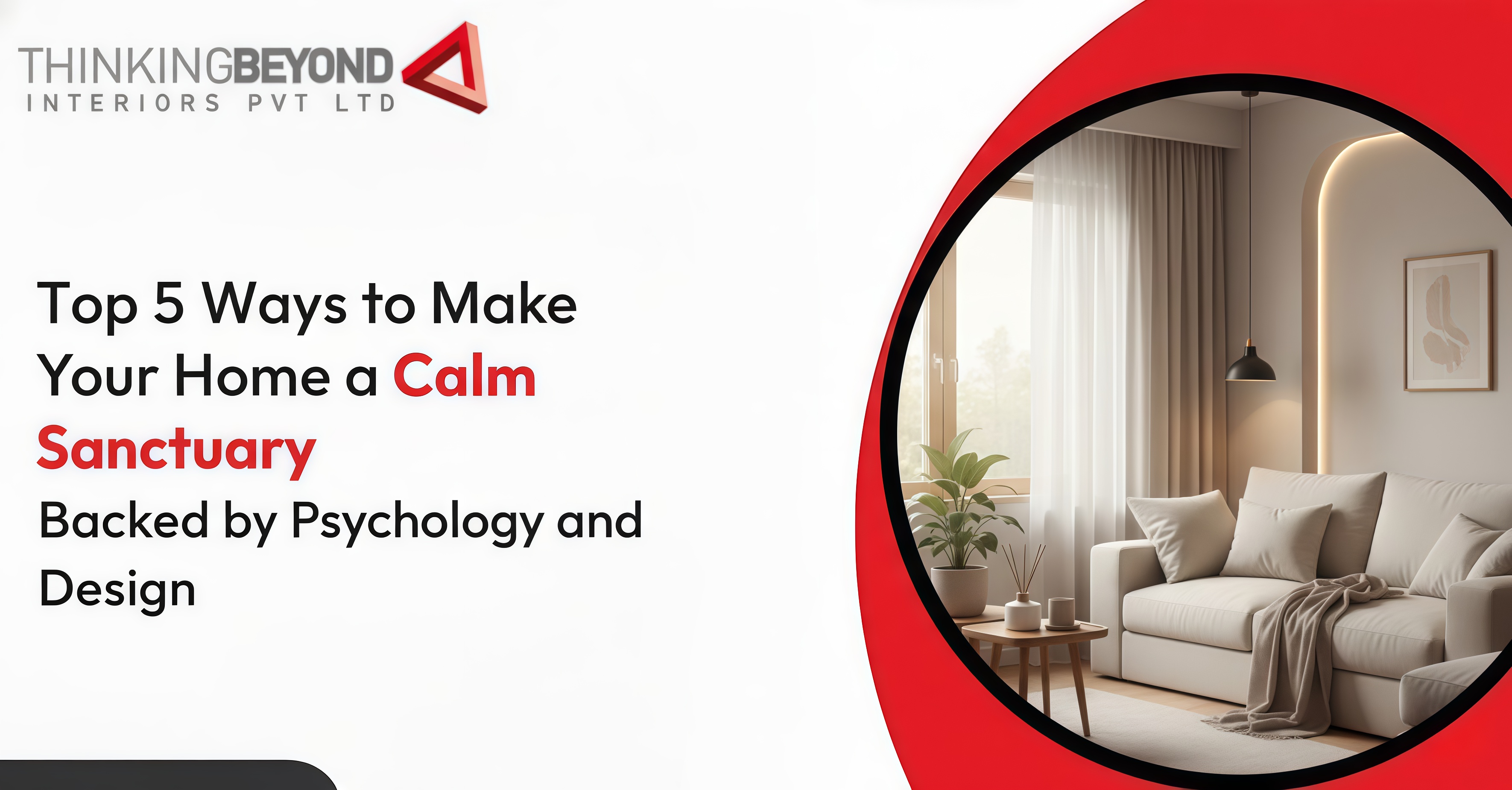
In the new world of hectic life, homes are not equal to sleeping or repositories. They have turned into emotional places where individuals relax, interact, and rejuvenate. As stress, online overload, and urban clamor continue to rise, homeowners are aggressively seeking solutions to transform their homes into a more peaceful and relaxing environment. When interior design is directed by psychology and human behavior, it is a mighty force in the development of the way we feel within a space.
Aesthetic concerns are not the only concerns of designers today, as they are also concerned with the effect of interiors upon mood, energy level, focus, and emotional well-being. The peaceful domestic refuge is not one of luxury and size; it is one of considered decisions, the decisions that correspond to the reaction of the human mind to the space, color, light, and order. The following are five effective methods of making your home a serene nest with the help of psychology-supported interior design concepts.
1. Designing with Soothing Colours That Calm the Mind
One of the most studied issues of interior design is color psychology. Colors around us directly affect us in terms of our emotions, level of stress, and comfort. The ability to select the appropriate palette is the basis of a peaceful, homely atmosphere.
How Colours Influence Emotional Well-Being
- The use of soft and muted music contributes to the minimization of mental overstimulation and visual fatigue.
- Cool colors such as blues and greens have been known to slow the heart rate to induce relaxation.
- Warm neutrals provide a feeling of neutrality and down-to-earthness.
- Pale colors or high-contrast colors may cause anxiety and restlessness.
Best Colour Choices for a Calm Home
- Pastel blue, sage green, lavender, and pastel beige.
- Sandy, clayey, taupe, and dull terracotta.
- Palettes, which are monochromatic and produce a visual continuity.
- Staying away from too much black, red, or neon in areas where people relax.
According to psychologists, relaxing color schemes help the brain to be relaxed, particularly in bedrooms, living rooms, and personal areas. When colors naturally transition through rooms, the house does not seem as chaotic but more harmonious.
2. Creating Clutter-Free Spaces to Reduce Mental Stress
A connection between clutter and mental health is one of the most powerful associations between interior design and psychology. Due to a distracting environment, the capabilities to relax and concentrate on a task are frequently difficult, particularly when the environment is cluttered.
Why Clutter Affects the Mind
- Visual clutter causes the brain to formulate information that is not necessary.
- Cluttered areas leave one with a sense of incomplete work.
- Lack of organization heightens anxiety and low productivity.
- Open spaces left clean enable the mind to rest.
Design Strategies to Reduce Visual Noise
- In-built storage space concealing daily-use objects.
- Kitchens, bedrooms, and living areas have closed cabinets.
- Hidden storage Multipurpose furniture.
The designers apply the principle of visual breathing space and make sure that all rooms have spaces that are left deliberately open. This will assist in establishing a feeling of security and dominance, which will make the house look lighter and more serene.
3. Using Natural Light and Soft Lighting to Improve Mood
The quality of our sleep and our mood are affected directly by lighting in relation to the circadian rhythm. The lighting may result in fatigue, irritability, and even depression, whereas well-thought-out lighting may help to relax and be mentally clear.
Psychological Benefits of Natural Light
- Increases serotonin, lifting the mood.
- Regulates sleep-wake cycles
- Increases concentration and lowers eye fatigue.
- Makes areas open and friendly.
How to Design Calm Lighting at Home
- Making the daylight as much as possible with sheer curtains or bigger openings.
- Replacing unnatural cool lights with warm white lighting.
- The light has layers: ambient, task, and accent lights.
- not using too bright ceiling lights in areas of relaxation.
Safety and comfort are achieved through soft and diffused lighting. The living room, meditation rooms, and bedrooms are very good rooms where warm lights resembling those in the sunset are valuable, as they enable the body to unwind naturally.
4. Bringing Nature Indoors to Restore Emotional Balance
The biophilic design, which is concerned with the incorporation of nature in interiors, has its roots in psychology. Human beings have a natural attraction towards the natural aspects, and interaction with the natural has proven to relieve stress and improve overall well-being.
Why Nature Calms the Human Mind
- Green vegetation reduces blood pressure and anxiety.
- Natural textures provide a ground effect.
- Organic shapes are not as aggressive as sharp edges.
- Spaces that are nature-inspired enhance concentration and happiness.
Ways to Introduce Biophilic Elements at Home
- The inclusion of indoor plants in living quarters and bedrooms.
- Natural materials include wood, stone, cotton, and linen.
- Textures and patterns inspired by the earth.
- Art that speaks of nature or bodies of water.
Minor details like a potted plant placed by one of the windows or wooden furniture finishes can create a tangible effect on the relaxing atmosphere of a home. Biophilic elements are frequently deployed by designers to make contemporary interiors seem softer, as well as more emotionally supportive.
5. Designing Dedicated Calm Zones for Mindful Living
A serene house not only refers to the general look but also to deliberate areas to relax and meditate. The role played by psychology is that of ensuring that there are specific areas that apply to the brain to slow down.
Why Calm Zones Matter
- Assists in detaching work stress and personal life.
- Promotes relaxation and meditation.
- Enhances emotional management.
- Helps to sleep better and be mentally clear.
Examples of Calm Sanctuary Spaces
- Soft and cozy sitting corners with warm lighting.
- Minimal decoration in meditation or prayer space.
- A bedroom design that was not so much on technology.
- A window or balcony nook with which to spend moments in silence.
These areas must be clear of any distractions like televisions or loud colors and over-decorations. It is aimed at establishing an environment in which the mind will feel free to relax and rest.
Conclusion
Creating a calm home sanctuary is about aligning design choices with how the human mind responds to space. When psychology and interior design work together, homes become places of comfort, balance, and emotional safety rather than sources of stress. Thoughtful layouts, soothing colours, organised spaces, natural elements, and dedicated calm zones can transform any home into a peaceful retreat.
For homeowners looking to create such emotionally intelligent spaces, Thinking Beyond Pvt. Limited brings expertise in designing interiors that balance aesthetics, functionality, and mental well-being. By understanding both design principles and human psychology, they help turn everyday homes into calm sanctuaries that truly support modern living.