

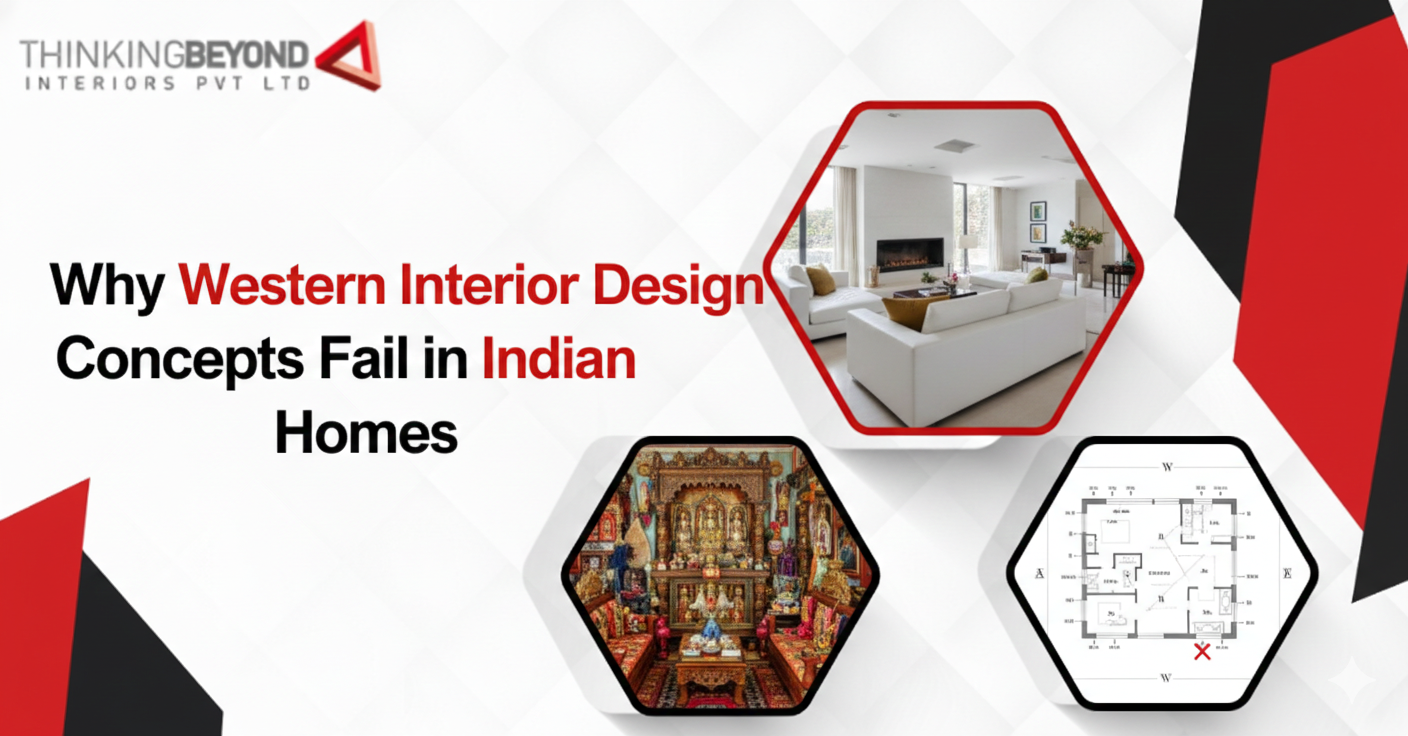
Western interior design ideas have become very popular through social media, international magazines, and luxury design shows. Minimalistic and open kitchens, minimal furniture, neutral colors, and heavy use of glass in design can look amazing in photos. Nevertheless, these ideas are magazines when implemented directly in Indian homes. Climate, culture, family setup, everyday routines, and religious orientation are the elements of Indian homes. Neglecting such aspects and simply applying Western principles of interior design in the Indian family usually causes practical problems, inconvenience, and even emotional disappointment. It is very important to know the cause of such a mismatch before arranging or remodeling a house.
Cultural Differences Between Western and Indian Living Styles
In the western houses, individual living is the design of the houses, whereas a family-oriented lifestyle is the design of the Indian houses. This inherent contrast renders most of the imported design concepts inappropriate in Indian households.
Different Daily Routines and Usage Patterns
Western households typically serve smaller families that have regular schedules. Depending on their homes,
- Indian households require movable seating and multipurpose
- Western designs seldom take into consideration frequenters.
- Indian households require much more storage.
Emotional and Social Uses of Spaces
Indian homes do not have living rooms as a means of relaxation, but as a multipurpose seating.
- During meetings, floor seating is usually applicable.
- Special areas are needed for prayer and ritual actions.
- Housing and privacy have to co-exist.
These cultural facts render Western interior design concepts in Indian homes as being limiting and unworkable in the long run.
Climate Mismatch and Environmental Unsuitability
The western interior is mostly designed to suit a colder climate, which does not fit with the climate of India, as the country has a wide range of weather patterns, including warm weather.
Material Choices That Don’t Suit Indian Weather
Homes are covered with glass walls, carpet floors, and closed designs that trap heat.
- Large amounts of glass make indoor temperatures higher.
- Dust and allergens are attracted to carpets.
- Wood finishes can be warped in case of humidity when they are made of light wood.
Ventilation and Natural Cooling Issues
The Indian houses are designed in a way that they focus on airflow as compared to the Western houses, which are usually dependent on artificial climate.
- Poor cross ventilation raises the energy expenses.
- Enclosed kitchens are hot and stuffy.
- The problem of inadequate airflow compromises indoor air quality.
This alienation of the climate is a primary factor why the Western interior design ideas in Indian homes are not functional.
Ignoring Vastu and Spatial Energy Balance
Vastu Shastra is very important in the perception of comfort, positivity, and well-being of Indian homeowners. Directional energy flow is not much considered by Western design philosophies.
Directional Placement Conflicts
Entrances, bedrooms, and kitchens that are not designed in Vastu congruence may be disturbing to the Indian families.
- Poor location of operations in the kitchen influences health beliefs.
- Improper bedroom directions are disruptive to sleep and peace.
- Ineffective entrances are associated with economic pressure.
Psychological Impact of Energy Imbalance
Spatial harmony is subliminal to even contemporary house owners.
- Lousy layouts cause psychological agitation.
- Houses are visually good to the senses and cold to the heart.
- Locals are prone to being Energy Imbalance sense that something is wrong.
Devoid of Vastu, the Western notions of interior design in Indian houses find it difficult to offer emotional gratification.
Minimalism Doesn’t Match Indian Storage Needs
The western Fails Western minimalism encourages simple living with little stuff in the house, something that is not in line with Indian lifestyles.
Smart Storage is Needed in Indian Homes.
Indian homes need more storage, which is natural since seasonal clothes are necessary, as well as kitchen supplies.
- Carnival decorations and religious products.
- Bulk grocery storage
- Antiques and olden dayhomes.-day utensils.
Hoarding Underground Clutter Stresses.
Minimal designs tend to conceal shortages of storage under sanitary designs.
- Crowded cabinets make usability poor.
- Inadequate planning to store products adds to the daily frustrations.
- Minimalism in visual terms does not mean functional comfort.
Open Layouts Fail in Indian Family Structures
The concept of open-plan living is the latest craze in the West but setups is incompatible with the Indian home life.
Privacy vs. Togetherness
The Indian families appreciate time together and privacy.
- Open kitchens diminish the privacythe privacy of cooking.
- Open layouts are easy to transmit noise.
- Older people might feel out of place.
Practical Challenges
Indian cooking is done daily with spices, oil, and heat, which cannot be handled in the open layouts.
- Smells were dispersing around the house.
- Additional cleaning demands.
- Reduced visual comfort
These issues demonstrate why WesternWestern interior design ideas in Indian households usually have to be heavily customized.
Aesthetic Appeal Over Practical Longevity
The western interior requires the use of visual appeal, whereas the Indian houses need to be durable and flexible.
Maintenance Becomes a Headache
Light colors and delicacy of finishes do not suit Indian conditions.
- A high frequency of cleaning is necessary.
- Wear and tear show quickly.
- Maintenance costs increase.
Designs Age Faster
Fashions come and go, but Indian homes are long-lasting investments.
- Fashionable designs go out of style very fast.
- Poor resale value is caused by a lack of adaptability.
- Practicality is more important than aesthetic innovation.
Such incongruity also serves as an additional reason why Western interior design ideas failed to work in Indian households.
Why Indian Homes Need Contextual Interior Design
Indian interiors are successful because they combine international style with nationalistic feelings.
Balanced Design Approach
The Indian homes today enjoy the selective Western influences and Indian practicality.
- Climate-responsive materials
- Vastu-aligned layouts
- Space planning based on families.
Design Rooted in Lifestyle
Houses must demonstrate everyday practices, values, and emotional desires.
- Areas of festivals and rites.
- Storage was built in.
- Adaptability towards changing family demands.
It is only such contextual planning that guarantees enduring comfort beyond skin-deep attractiveness.
Conclusion:
Although Western interiors might be aesthetically beautiful, an application of Western interiors can result in functional, emotional, and cultural disillusionments. The Indian houses demand designs that uphold climatic, family, Vastu, and lifestyle patterns. Knowing why Western interior design ideas in Indian homes fail will enable the homeowners to make good decisions and prevent expensive errors.
An intelligent interior design combining contemporary style and Indian sensibilities is offering homesteads that are cozy, encouraging, and classic. This is where professional knowledge is needed. Thinking Beyond Pvt. Limited is a company that focuses on something beyond trends and designs homes that are indeed in line with the Indian lifestyle, culture, and long-term well-being.